AI UGC Is Now Your Default Creative Stack—Here's the Playbook
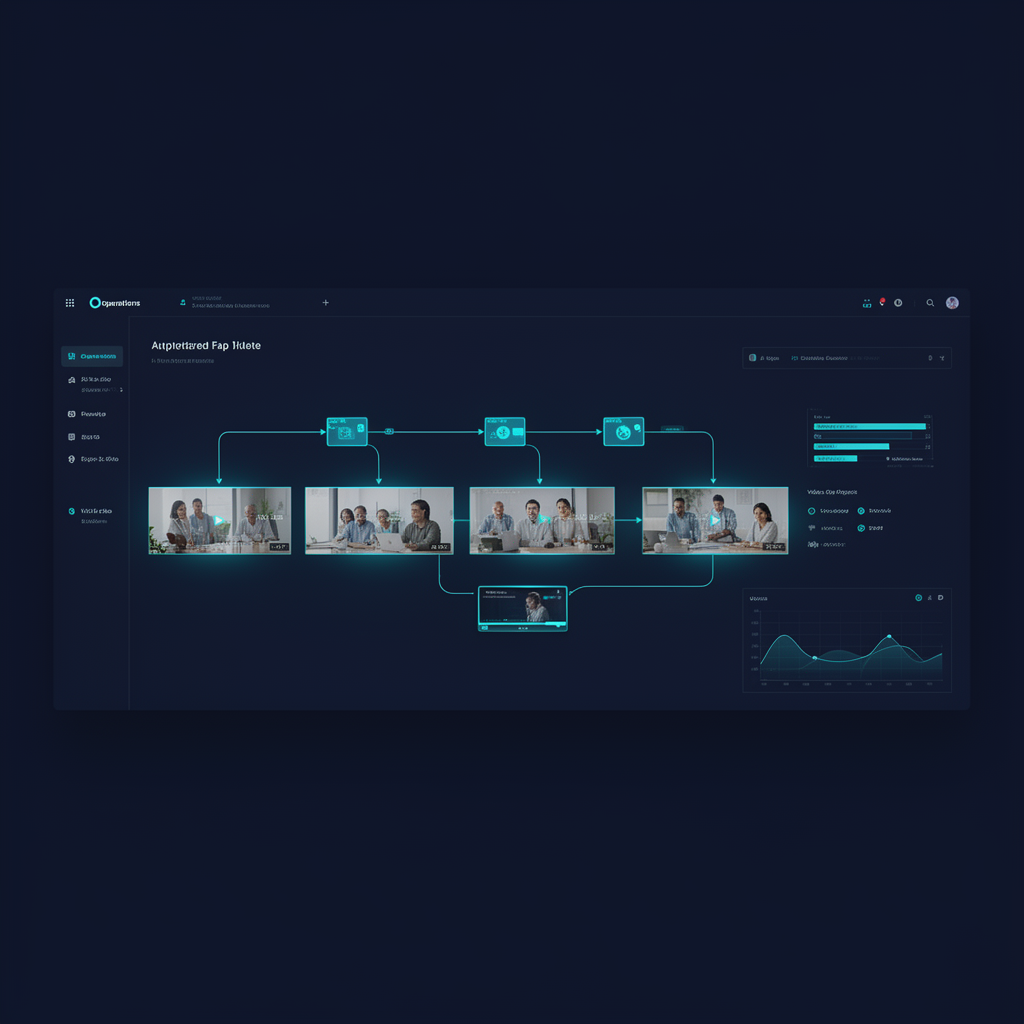
The 2-Minute UGC Video Just Killed the Traditional Production Cycle
Last month, a brand we work with generated 47 variant ad creatives in an afternoon. Total cost: under $200. Their previous agency retainer was $8,000 monthly for four deliverables. This isn't a future-state scenario—it's the operational reality for teams that have already rebuilt their creative infrastructure around AI-native production.
The shift from "experimenting with AI UGC" to "AI UGC as default workflow" happened faster than most predicted. Platforms like MakeUGC now offer end-to-end script-to-render pipelines that compress what was a 2-week production cycle into 120 seconds. The downstream effect: brands are no longer testing AI content as a novelty. They're restructuring teams around its velocity.
For HybridAI Media, this transition phase is where most value gets captured—or lost.
What "Content Automation" Actually Means in Practice
Content automation isn't scheduling posts. It's eliminating decision bottlenecks between insight and publication. The teams winning right now have built systems where:
- Performance data feeds directly into script generation
- Variant testing runs without human approval gates
- Platform-specific formatting happens automatically
- Compliance and brand safety checks run pre-render
The Reddit workflow that went viral last month—automating from AI UGC generation through to posting—is replicable now because the integration points finally exist. What took custom Python six months ago takes Zapier connectors today.
The liability landscape is shifting in parallel. With regulatory pressure mounting on frontier model releases and new precedents forming around AI-generated content responsibility, your automation stack needs audit trails. Not for someday—for your next campaign review.
The Three Systems Every Brand Needs
After running hundreds of campaigns through AI-native pipelines, we've identified the non-negotiable infrastructure:
1. The Input Layer: Structured Briefing at Scale
Most AI UGC underperforms because inputs are under-specified. "Make me a skincare ad" returns generic results. The teams getting outsized returns use structured briefs that lock in: emotional hook, visual reference, talent archetype, and CTA placement. These become templates that improve with each iteration.
2. The Render Layer: Quality Gates Before Human Review
Automated doesn't mean unmonitored. Build checkpoints for: lip-sync accuracy, product visibility, background consistency, and audio clarity. The best operations run 80% of outputs through automatic approval, reserving human attention for edge cases and optimization.
3. The Distribution Layer: Platform-Native Formatting
A 9:16 video with burned captions performs differently on TikTok, Instagram Reels, and YouTube Shorts—same creative, three distinct treatments. Your automation should handle aspect ratio, caption style, hook timing, and end-card variations without manual intervention.
Where Infrastructure Investments Are Actually Landing
The cost structure of AI-native production is improving faster than headline prices suggest. Recent infrastructure build-out—compute scaling, model efficiency gains, and competition among inference providers—is compressing per-render costs 30-40% quarter-over-quarter for established operators.
This matters because it changes your break-even math. A campaign that needed 10x ROAS to justify production six months ago now clears at 3x. That gap is where market share shifts.
Consumer AI adoption patterns are also diverging. The platforms gaining traction aren't always the ones with the best models—they're the ones with the tightest integration into existing marketing workflows. For brands, this means vendor selection criteria should weight API reliability and webhook support as heavily as output quality.
The 90-Day Implementation Roadmap
Weeks 1-2: Audit your current creative bottleneck
Map where time and money actually go. Most brands discover 60%+ of production spend sits in revision cycles and format adaptation—not concepting or capture.
Weeks 3-6: Pilot one AI UGC pipeline with strict success metrics
Pick a single product, single platform, single objective. Measure: cost per usable creative, time to publish, and performance parity against legacy production. Don't optimize for quality alone—optimize for quality at velocity.
Weeks 7-10: Build your automation scaffolding
Connect your render platform to your asset management, approval, and publishing tools. Document where human intervention is still required and why.
Weeks 11-12: Scale or iterate based on data
The brands that move fastest here aren't the ones with the biggest budgets. They're the ones with the shortest feedback loops between creative output and performance signal.
The Real Competitive Moat
AI UGC tools are becoming commoditized. The script-to-video platforms launching this quarter will be indistinguishable to most users by next quarter. The sustainable advantage isn't access to generation—it's the operational system around it: how you brief, how you filter, how you route for approval, how you learn from performance.
Content automation at scale is a data architecture problem wearing creative clothes. The teams building that architecture now will define category benchmarks for the next two years.
HybridAI Media builds these systems for brands moving from experimental to operational. If your creative team is still treating AI UGC as a pilot project, you're already behind the operators who integrated it into their default stack last quarter.