The 2026 AI UGC Pipeline: From Product Photo to Posted Ad
The 2026 AI UGC Pipeline: From Product Photo to Posted Ad
Two stories dominated this week's AI news, and both matter more to your content calendar than they first appear. Aleph Alpha released Kolibri-1, a sovereign open-weight model built as a serious option for local inference. Microsoft, meanwhile, published a critical post-mortem on agent reliability. One changes where your models run. The other is a reality check on how you orchestrate them.
At HybridAI Media we run AI UGC pipelines for brands every day, so we read both as pipeline news, not research news. Here is what actually ships in October 2026 — and where the gaps still are.
Where AI UGC stands in October 2026
The tooling has finally caught up with the promise. MakeUGC ships 1,000+ realistic AI actors out of the box. Practitioners on r/DigitalMarketing are wiring SeeDance 2.0 outputs into workflows that carry a clip from generation all the way to posting without a human touching a file. Nate Herk's n8n builds show the whole thing is achievable no-code: product photos in, finished video ads out.
The honest caveat comes from Creator.co, and we agree with it: AI UGC performs where content is functional rather than trust-dependent. Product demos, unboxings, and “three reasons to switch” formats convert. Founder narratives and high-consideration trust plays still belong to real creators. Plan around that split instead of pretending it does not exist.
The five stages of a production pipeline
Every AI UGC system we run shares the same skeleton:
- Ingestion. Product photos, brand kit, approved claims, and an exclusion lexicon (more on that below).
- Generation. Script, avatar, voiceover, b-roll, captions.
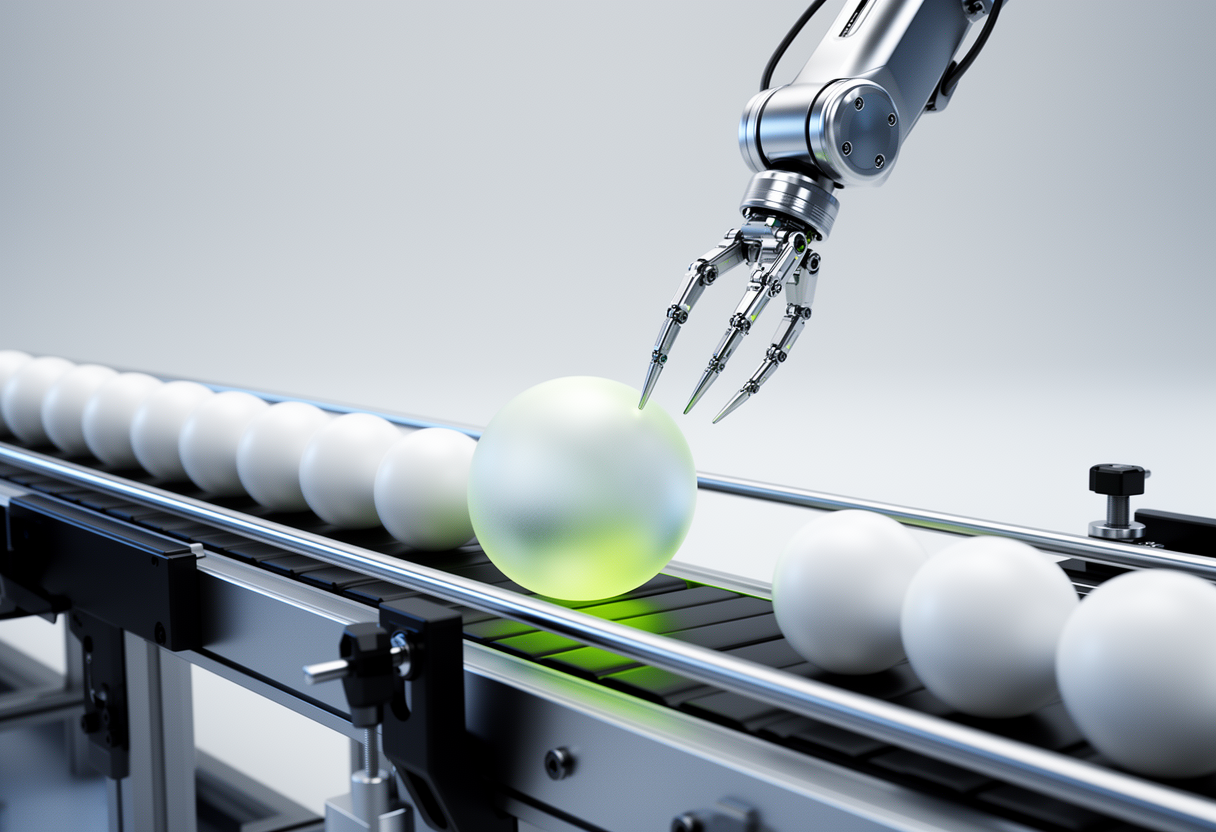
- Post-processing. Deterministic fixes applied to every output, no exceptions.
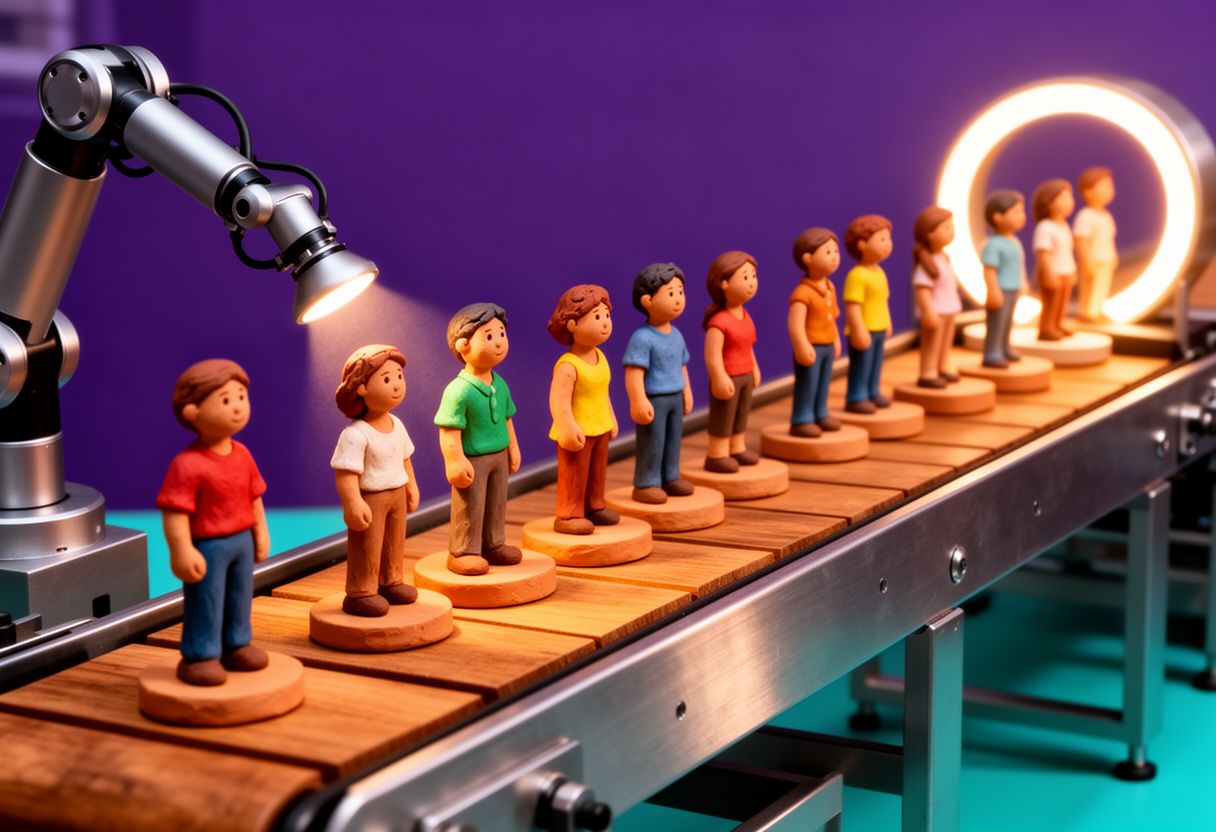
- Variant explosion. Hooks, CTAs, avatars, pacing — dozens of micro-iterations per hero concept.
- Distribution and feedback. Scheduled publishing, with performance data flowing back into the next brief.
Most teams over-invest in stage two and under-invest in stages three and five. That is why their pipelines demo beautifully and ship badly.
Generation is only half the job
Here is the detail most hype threads skip: hybrid media pipelines lean on deterministic post-processing to correct AI hallucinations in text-to-video output. The magic is roughly 50% generative and 50% traditional compositing — a pattern documented in agency case studies around tools like Higgsfield and Luma.
Our post-processing layer handles frame interpolation for temporal smoothness, caption burn-in in brand typography, color LUTs for cross-variant consistency, audio ducking, logo locks, and platform-specific safe zones. None of it is glamorous. All of it is the difference between output that looks like an ad and output that looks like a demo.
Negative prompts as compliance guardrails
A lesser-known practice turns one of the most technical parameters in image generation into a strategic tool: brands use negative prompting not just to exclude visual clutter, but to enforce strict brand safety guidelines by explicitly defining what cannot appear. It is a documented practice in enterprise prompt-engineering guides, and it functions as a digital guardrail system.
The production version: maintain a brand exclusion lexicon in your pipeline config — competitor marks, unapproved claims, recurring generation artifacts, restricted visual themes. Every generation job inherits it automatically. Compliance review stops being a per-asset scramble and becomes a quarterly config review.
Infinite variants: the A/B engine
The biggest performance unlock of 2026 is volume testing. Brands now use AI to create infinite variants of a single hero asset, enabling hundreds of micro-creative iterations for A/B testing. Our standard cadence: one hero concept becomes 30–50 variants across the first three seconds (the hook), CTA phrasing, avatar choice, and pacing. Variants go into paid distribution; winners earn budget and a real-creator remake.
The metrics shift accordingly: hook rate, three-second hold, and CPA per variant. Creative testing stops being a quarterly event and becomes a continuous background process — which is the entire point of content automation.
Where the model runs is now a strategy decision
Kolibri-1 changes the local inference calculus for AI marketing stacks. A sovereign open-weight model strong enough for agentic work means the LLM layer of your pipeline — scripting, routing, evaluation, brief generation — can run on hardware you control. Meanwhile, the community keeps proving massive MoE models can run on consumer rigs, so “we cannot run it locally” stopped being an excuse in 2026.
Our next step is the obvious one: benchmark Kolibri-1 against our current Qwen/GLM stack to evaluate it for our local agentic OS. The business case for AI marketing teams is data sovereignty for EU clients, predictable per-output costs, and lower latency on the orchestration layer. Heavy video generation stays API-side for now; the intelligence comes home.
Reliability: the orchestration tax
Microsoft's agent-reliability post-mortem is the reminder of the month: pipelines break at handoffs, not at generation. Whatever model you run, the fixes are structural — idempotent steps that can retry safely, an eval harness that scores every output before it reaches a scheduler, and human checkpoints at the two moments that matter: claim accuracy and final brand review.
Notice what those checkpoints do to your role. You stop operating tools and start directing them. You are not scrubbing a timeline; you are approving takes.
When real creators still win
Keep the split deliberate. AI UGC for volume, velocity, and testing. Real creators for trust-dependent winners — then feed their winning formats back into the system as templates. That loop, synthetic scale feeding human craft and human craft sharpening the synthetic system, is the hybrid in our name.
Your Q4 2026 checklist
- Audit your post-processing layer, not just your generation stack.
- Codify the exclusion lexicon and make every job inherit it.
- Set a weekly variant-testing cadence with hook-rate and CPA targets.
- Pilot local inference for orchestration before committing a budget.
- Define exactly two human checkpoints — no more, no fewer.
The teams that treat AI UGC as a system — generation, guardrails, variants, distribution, feedback — will outproduce the teams still treating it as a prompt. The tooling is ready. In 2026, orchestration discipline is the differentiator.