AI UGC in 2026: Why Low-Fidelity Beats Photorealism

The AI UGC Shift: Why Low-Fidelity Beats Photorealism in 2026
In 2026, the debate over AI safety and speed has largely settled into a practical consensus: efficiency wins. For brands leveraging AI marketing and content automation, the focus has shifted from raw generative power to operational viability. The release of DeepSeek V4.1 Flash, which outperforms frontier models on new benchmarks while remaining viable for local inference, marks a pivotal moment. It signals that high-performance agentic systems no longer require cloud-heavy infrastructure. However, the biggest leap in AI UGC (User-Generated Content) isn't in the compute—it’s in the aesthetic strategy.
The End of the Uncanny Valley
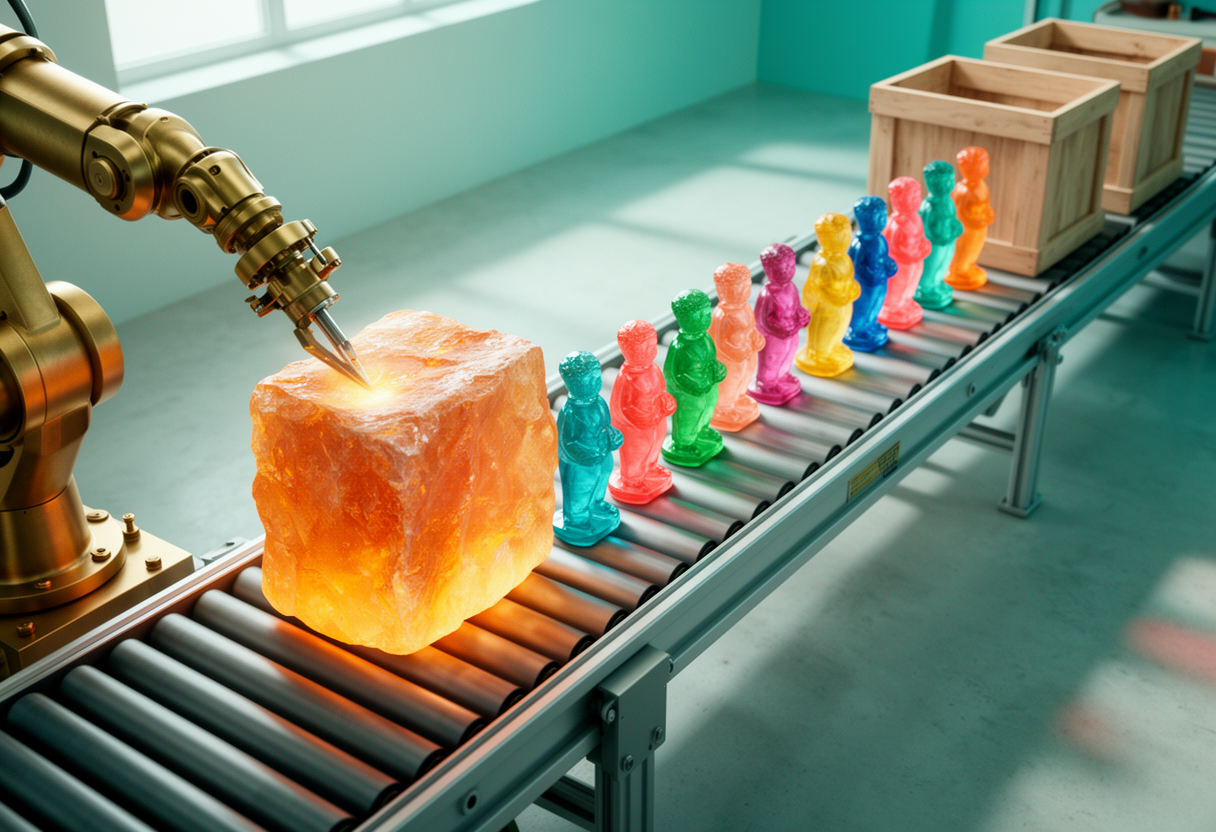
For years, the primary barrier to AI video adoption was the "uncanny valley"—the subtle motion artifacts that made photorealistic AI look eerie. In 2026, industry case studies from major brands reveal a counterintuitive solution: bypassing photorealism entirely. By adopting low-fidelity styles such as claymation, 2D animation, or stylized 3D, brands naturally mask the subtle motion inconsistencies that still plague high-res diffusion models. This "low-tech" aesthetic is now strategically superior for early-stage AI video adoption, allowing content automation pipelines to run at higher volumes without the human eye catching on micro-artifacts.
The Hidden Cost of Per-Iteration Economics
As we integrate these workflows, a critical economic shift is occurring. The cost of AI content creation is no longer defined by the price of a single asset. Instead, it is shifting to a "per iteration" model. Brands save significantly on production costs but spend more on human curation and quality control. This inversion of the traditional cost-saving narrative means that AI marketing teams must budget for curation, not just generation. The bottleneck is no longer the machine’s ability to create, but the human’s ability to select the best option from dozens of viable variations.
Temporal Consistency: The New Cinematography
Technical breakdowns of current diffusion models highlight a persistent challenge: "temporal consistency." This refers to the subtle changes in an object’s appearance from frame to frame. In 2026, this dictates specific cinematographic rules for AI content that differ from traditional filming. To hide this flaw, our pipelines now enforce static backgrounds or slow, deliberate camera moves. Rapid pans or complex lighting shifts are avoided in automated AI UGC generation because they exacerbate the flickering of textures and shapes. This constraint is not a limitation; it is a design language. By embracing slower, more grounded camera work, we create a cohesive visual identity that feels intentional rather than glitchy.
Building the 2026 Automation Stack
The practical application of these insights requires a robust content automation stack. We are currently benchmarking DeepSeek V4.1 Flash against our existing Qwen/GLM configurations. The goal is to upgrade our local agentic OS without increasing hardware costs, leveraging the model’s efficiency for local inference. This allows us to run complex multi-agent workflows—where one agent generates the script, another handles visual styling, and a third manages temporal consistency checks—entirely on-premise.
This local-first approach is critical for maintaining brand voice. Most AI-generated brand copy is trained on public web data, implicitly mimicking the average tone of the internet. To avoid sounding generic, we apply significant "negative prompting" and fine-tuning. Our agentic system now includes a dedicated "Brand Voice Guard" agent that scans output for generic phrasing, ensuring the final AI UGC aligns with the brand’s specific personality rather than the average of the web.
Practical Implementation: The n8n Workflow
For teams looking to replicate this, the workflow is manageable. Using a no-code platform like n8n, you can build a system that automatically creates UGC ads from product photos to full video ads. The process involves:
- Input: Upload product photos and a brief description.
- Style Selection: Choose a low-fidelity aesthetic (e.g., "claymation style" or "2D vector").
- Generation: The AI agent generates multiple video variations, adhering to the slow-camera-move rule.
- Curation: A human or an advanced AI critic selects the best three options based on temporal consistency.
- Output: The selected assets are formatted for social media platforms.
This system reduces the time from idea to asset from days to hours. By focusing on low-fidelity styles and strict cinematographic rules, we mitigate the technical flaws of current AI video models. The result is AI UGC that feels native to social feeds, blending seamlessly with human-created content.
The Future of AI-Native Content
As we move deeper into 2026, the divide between "AI-made" and "human-made" content will continue to blur. The key is not to chase photorealism at all costs, but to embrace the strengths of AI: speed, consistency, and the ability to generate infinite variations. By adopting low-fidelity aesthetics, understanding the per-iteration cost model, and enforcing temporal consistency, brands can build AI marketing systems that are both efficient and effective.
The future of content automation is not about replacing humans, but about augmenting them with systems that handle the heavy lifting of generation, leaving humans to focus on curation and strategy. With tools like DeepSeek V4.1 Flash enabling local, high-performance inference, the barrier to entry for sophisticated AI UGC pipelines is lower than ever. Now is the time to test these workflows, benchmark your models, and refine your brand’s AI voice before the competition does.