AI UGC in 2026: The Content Automation Playbook for Brands
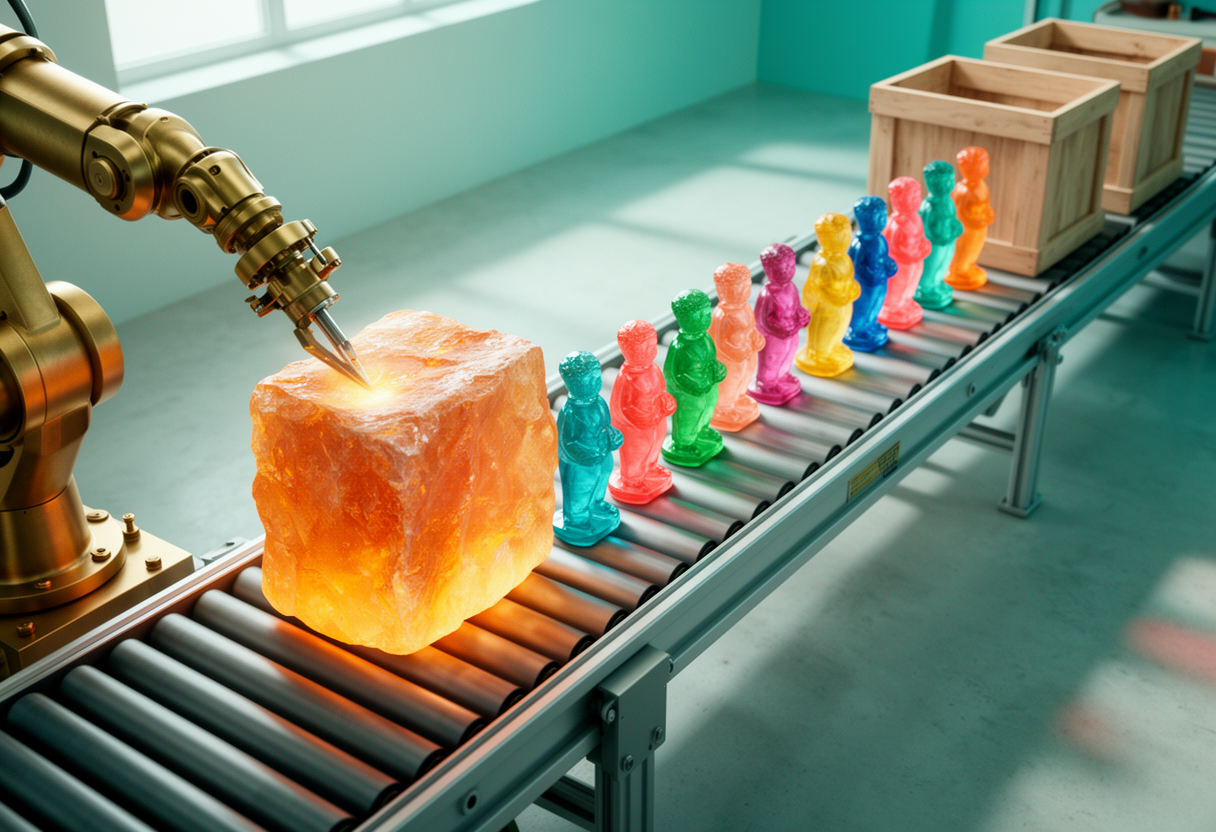
The gap between brands publishing three ads a month and brands testing thirty variants a week is no longer talent or budget. It's architecture. In 2026, AI UGC has crossed the quality threshold where audiences can't reliably distinguish synthetic creators from human ones — and the teams winning are the ones treating content as a pipeline, not a project. Here's how to build one, what marketing history says about where this is heading, and the guardrails to install before you scale.
AI marketing didn't start with ChatGPT
The industry likes to pretend generative AI arrived in late 2022. The record says otherwise. In 2018, Lexus aired the world's first AI-scripted TV commercial — IBM Watson wrote the script after ingesting 15 years of award-winning car ads (Lexus UK / The Drum, 2018). A luxury brand, the most brand-protective species in marketing, put a machine inside its creative process five years before ChatGPT existed.
The lesson isn't that AI writes great car ads. It's that frontier brands were comfortable with machine-assisted creativity long before it was cheap or self-serve. What changed by 2026 is access: the Lexus-budget experiment became a workflow any brand can run.
What changed: generation went self-serve, orchestration went no-code
Three shifts define this moment:
- Generation quality. Dedicated AI video generators went mainstream. MakeUGC offers 1,000+ realistic AI actors alongside cinematic and animated clips; CreateUGC ships final videos with deepfake-level lip sync. What used to require a creator, a brief, and a shoot day now requires a product photo.
- Motion realism. Since the SeeDance 2.0 release, practitioners on r/DigitalMarketing have reported surprisingly good results from fully AI-generated UGC — and, more tellingly, started building automated workflows that run from generation all the way to posting.
- Orchestration. Automated content systems built in no-code tools like n8n now chain the whole loop. Nate Herk's UGC template is a good public example: product photos in, AI agents handle scripting and rendering, finished video ads out.
Generation is becoming a commodity. The moat is the system you wrap around it.
Anatomy of an AI UGC pipeline that ships daily
A production-grade content automation stack has six stations:
- Inputs. Product photos, a brand kit (voice, approved claims, banned phrases), and an offer sheet. Garbage in, brand-safety incident out — this layer matters more than any model choice.
- Script matrix. An LLM generates 15–20 scripts per product across fixed angles: problem–solution, unboxing, testimonial-style, comparison, 'I was skeptical.' Fixed angles make performance data comparable week over week.
- Batch rendering. Feed scripts to your AI UGC generator, match avatars to audience segments, render overnight. Compute is the real constraint here — more on that below.
- Human QA gate. Fifteen minutes of review per batch: claims accuracy, hand–product interactions, lip-sync glitches. Non-negotiable. This gate is what separates automation from liability.
- Automated distribution. API posting to TikTok, Meta, and YouTube Shorts with UTM tags applied automatically. Manual uploads are where pipelines go to die.
- Feedback loop. Performance data flows back into the script library. Winners get mutated into new variants; losing angles get retired. The library compounds. A freelancer doesn't.
The output of this system isn't 'an ad.' It's iteration velocity — the ability to learn faster than the competitor still briefing creators one video at a time.
The real unlock is long-tail personalization
Volume testing is the obvious win. The bigger one is variants. In 2021, Ogilvy India and Rephrase.ai let small local shops auto-generate ads in which a deepfaked Shah Rukh Khan named their specific store — celebrity endorsement at self-serve, long-tail scale, years before anyone said 'AI UGC.'
That play is now standard: one strong presenter, dozens of localized variants — city names, store names, SKUs swapped automatically. The same pipeline that ships thirty generic UGC ads can ship thirty targeted ones at the same marginal cost. That's the strategic shift: relevance at scale, not just volume.
Guardrails to install before you scale
- Copyright. The US Copyright Office refused copyright for the Midjourney images in Zarya of the Dawn (USCO, Feb 2023 — a position courts echoed in Thaler v. Perlmutter). Purely AI-generated brand visuals may be effectively unprotectable. Treat AI output as campaign material, not IP assets — and document the human creative direction (the scripts you shaped, the edits you made) that gives you something ownable.
- Disclosure. Label synthetic presenters wherever platforms or regulators require it. An undisclosed fake testimonial isn't a growth hack; it's an exposure.
- Quality bar. One uncanny-lip-sync ad in a feed does measurable trust damage. The QA gate exists to catch exactly that.
The compute ceiling is already moving
Every pipeline above eventually hits the same wall: inference and rendering cost at scale. That's why this week's news about Ricursive Intelligence's AI-chip design pipeline matters even to content teams — AI designing the silicon that runs AI points directly at cheaper, denser local inference. For anyone hosting their own models (as we do for parts of our stack), compute is the constraint most likely to unlock the next order-of-magnitude jump in output.
The practical 2026 move: keep your pipeline model-agnostic. Swap generators when quality leaps. Don't weld your workflow to one vendor's avatars.
A 30-day starting plan
- Week 1: Pick two products. Build the script matrix, generate 20 scripts.
- Week 2: Batch-render 15–20 AI UGC variants. Run the QA gate ruthlessly.
- Week 3: Launch small-budget tests. Automate posting and tagging.
- Week 4: Wire the feedback loop. Kill losers, mutate winners, expand the library.
In 2018, AI-scripted advertising took IBM Watson and a Lexus budget. In 2026, it takes a product photo and a workflow. The brands winning at AI marketing aren't the ones with the best prompt — they're the ones with the best pipeline.