2026’s AI UGC Shift: Local Inference & Agentic Workflows
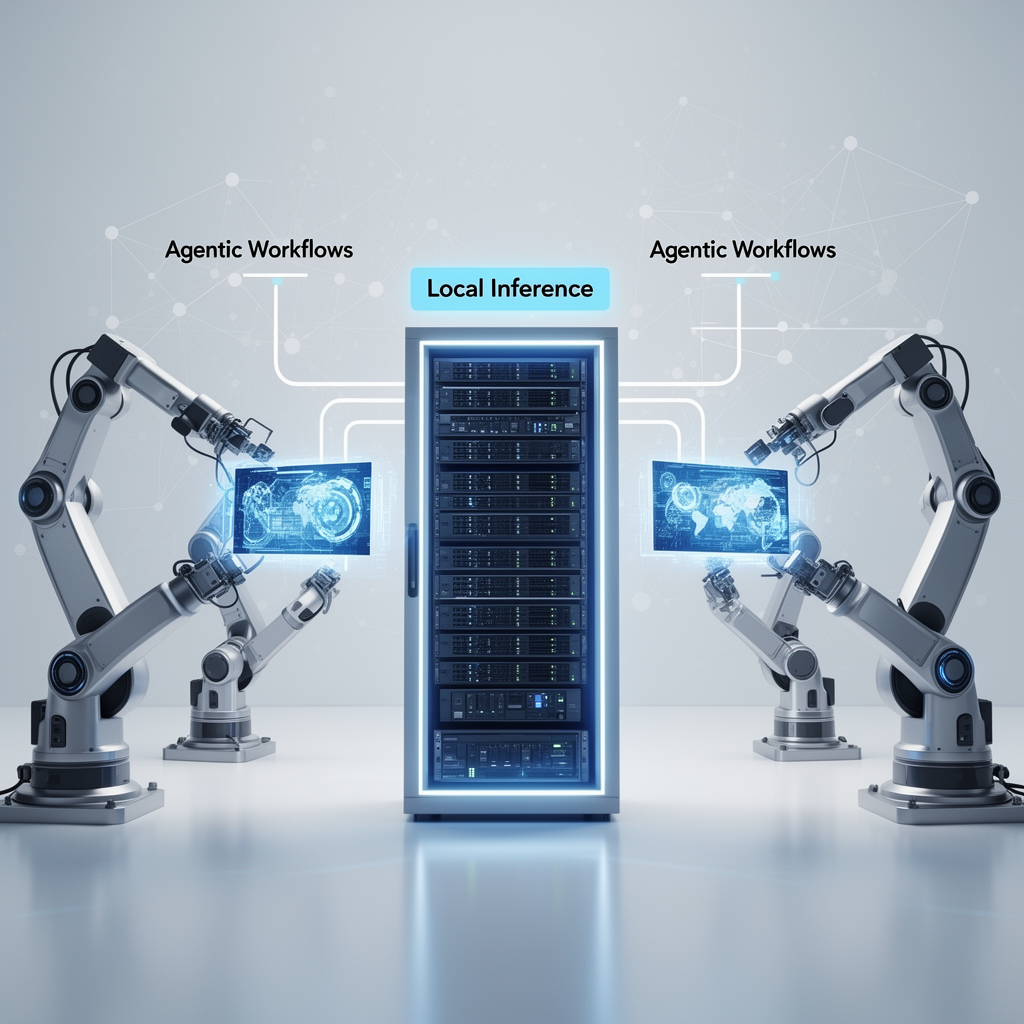
The 2026 Pivot: Why Local Inference and Agentic Workflows Are Redefining AI UGC
If you’ve been watching the AI landscape in 2026, you’ve likely noticed a quiet but seismic shift. The era of blindly trusting cloud-based generative models for all brand communications is ending. Instead, we are seeing a rapid migration toward local inference and agentic workflows. This isn’t just a technical tweak; it is a fundamental restructuring of how brands produce AI UGC and manage content automation at scale.
For agencies like HybridAI Media and the brands we serve, this shift is driven by two converging forces: intensifying regulatory scrutiny over synthetic media and the urgent need for data privacy in an increasingly decentralized digital ecosystem.
The Regulatory Pressure Cooker of 2026
The regulatory environment for AI marketing has tightened significantly this year. Governments worldwide are implementing stricter guidelines around synthetic media, requiring robust provenance tracking and data sovereignty. For brands, relying on third-party cloud APIs for high-volume content generation introduces unacceptable risks. If a vendor’s data handling practices change, or if a model is compromised, your brand’s intellectual property and customer data are exposed.
This regulatory backdrop makes local inference not just a performance optimization, but a compliance necessity. By running models locally or on private servers, brands retain full control over their data. This ensures that sensitive campaign strategies, customer insights, and proprietary brand voices never leave the secure perimeter. In 2026, data sovereignty is a competitive advantage, not just a legal checkbox.
From Generative to Agentic: The New Workflow
The second pillar of this shift is the move from simple text/image generation to agentic workflows. Early AI tools were passive; you prompted them, they responded. Today’s AI systems are active agents. They plan, execute, and iterate autonomously.
In the context of AI UGC, this means an AI agent doesn’t just generate a single video script. It researches trending topics, drafts multiple variations, selects the most culturally relevant hooks, generates the voiceover using a cloned brand voice, edits the footage, and even schedules the post. This level of content automation reduces human intervention from minutes per asset to seconds per review.
However, these agents require low-latency, high-availability environments. Cloud APIs often introduce lag and cost unpredictability when scaling to thousands of daily assets. Local inference provides the deterministic speed and cost structure needed for true agentic scaling.
Why Local Inference Wins in 2026
Local inference refers to running AI models on hardware owned or leased directly by the organization, rather than via remote cloud APIs. Here is why this is becoming the standard for serious AI marketing strategies:
- Cost Predictability at Scale: Cloud API costs can spiral with high-volume content automation. Local inference shifts costs to capital expenditure (hardware) and electricity, offering predictable marginal costs near zero for subsequent generations.
- Zero-Data Leakage: For brands in regulated industries (finance, healthcare, luxury), local inference ensures no data ever touches a third-party server. This is critical for maintaining trust and complying with 2026’s synthetic media regulations.
- Customization and Fine-Tuning: Local environments allow for real-time fine-tuning of models on brand-specific data. This ensures that AI UGC maintains a consistent, on-brand tone without the "generic AI" feel that plagues public models.
- Resilience: Decentralized operations mean your content pipeline doesn’t go down if a major cloud provider experiences an outage. This reliability is essential for maintaining consistent brand presence.
Implementing Agentic Workflows for AI UGC
Transitioning to this new stack requires a strategic approach. It is not about replacing cloud AI entirely, but about creating a hybrid system where local agents handle high-volume, sensitive, or repetitive tasks.
Step 1: Audit Your Content Volume
Identify which AI UGC assets are produced in high volume and contain sensitive data. These are your prime candidates for local inference. Video editing, voice cloning, and personalized ad variations are ideal use cases.
Step 2: Invest in Edge Infrastructure
Deploy local inference servers or utilize edge computing solutions. Ensure your hardware can handle the computational load of large language models (LLMs) and diffusion models for video. Tools like Ollama, vLLM, and optimized quantized models make this feasible on mid-range hardware.
Step 3: Build Agentic Orchestration
Use frameworks like LangChain or AutoGen to create agents that coordinate tasks. These agents should be able to trigger local inference models, process outputs, and feed results back into your content management system. The goal is content automation that feels human-led but is machine-executed.
Step 4: Implement Provenance Tracking
With 2026’s regulations, you must tag all synthetic media. Integrate watermarking and metadata standards (like C2PA) into your local workflow. This ensures your AI UGC is compliant and trustworthy, turning regulatory compliance into a brand asset.
The Future is Decentralized and Autonomous
The convergence of local inference and agentic workflows represents the maturation of AI marketing. We are moving away from the "prompt-and-pray" era toward a system of reliable, autonomous, and compliant content production.
Brands that adopt this hybrid, decentralized approach in 2026 will gain significant advantages: lower costs, higher privacy, faster iteration, and greater regulatory resilience. Those that cling to outdated, cloud-dependent models will find themselves struggling with rising costs, data risks, and generic output.
At HybridAI Media, we are already building these systems for our clients. We are seeing firsthand how local inference enables truly personalized AI UGC at a scale previously impossible. The future of content is not just AI-generated; it is AI-operated, locally secured, and autonomously optimized.
The question is no longer "Can we use AI?" but "How do we control it?" The answer lies in local inference and agentic workflows. Embrace this shift, and you will lead the next wave of digital marketing.